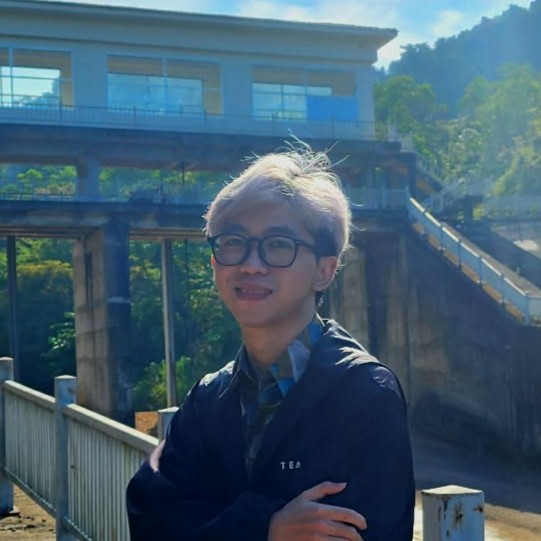
About
I am a Data Science graduate and AI Engineer focused on Healthcare AI, Computer Vision, Edge AI, and Generative AI. My experience spans physiological signal analysis, medical image segmentation, 3D reconstruction, reinforcement learning, retrieval-augmented generation, and deployment of AI-powered applications. I have authored research publications in healthcare AI and enjoy building end-to-end systems that transform research ideas into practical solutions.
Education
Bachelor of Science in Data Science
International University – Vietnam National University Ho Chi Minh City | 2020 - 2025
Focus areas: Machine Learning, Deep Learning, Computer Vision, Data Mining, Artificial Intelligence, and Statistical Learning.
Publications
A Hybrid Deep Learning Approach to Stress Detection: Integrating CNN-LSTM with Reinforcement Learning and Active Learning
2026
Authors: Tran, H.D.T., Nguyen, K.T., Jayatilake, S., Ho, V.L., Nguyen, T.T.Q.
Published in The 14th Conference on Information Technology and its Applications (CITA 2025) , Springer Lecture Notes in Networks and Systems (LNNS), Vol. 1581.
This work proposes a hybrid framework combining CNN-LSTM, Double Deep Q-Networks (DDQN), and Active Learning for stress recognition from physiological respiratory signals, achieving 95.1% classification accuracy.
Automated Surface-to-Solid Conversion for Bio-Printable Patch Fabrication from Three-Dimensional Wound Surface Models
2026
Authors: Nguyen, P.T.A., Tran, C., Tran, H.D.T., Pham, T.T.H., et al.
Accepted at The 11th International Conference on Biomedical Engineering in Vietnam (BME11) .
This work presents an automated pipeline for converting reconstructed wound surface models into fabrication-ready bio-printable patches. The framework integrates wound segmentation, 3D reconstruction, mesh processing, and conformal patch generation for personalized wound treatment applications.
Key results include:
- Dice Score: 0.921 ± 0.047
- Mean Chamfer Distance: 2.639 mm
- Successful processing of 21/21 wound cases
- 23.3% reduction in bio-ink consumption compared with conventional rectangular patches
Accepted for presentation and publication at BME11.
Experience
AI Research Assistant
Jan 2025 – Present
AI Lab – School of Computer Science & Engineering, International University (VNU-HCMC)
Conduct research at the intersection of Healthcare AI, Physiological Signal Processing, Computer Vision, and Edge AI. My work focuses on developing machine learning systems that transform biomedical data into practical tools for diagnosis, monitoring, and clinical decision support.
- Developed deep learning pipelines for stress recognition from respiratory physiological signals collected using wearable sensing devices.
- Designed CNN-LSTM architectures for temporal modeling of physiological time-series data and subject-independent stress classification.
- Investigated Double Deep Q-Network (DDQN) based active learning strategies to improve data efficiency and reduce annotation requirements.
- Built end-to-end preprocessing, training, and evaluation pipelines using LOSO (Leave-One-Subject-Out) validation for real-world generalization assessment.
- Contributed to computer vision research involving wound segmentation, 3D reconstruction, and patient-specific bio-printable patch generation.
- Explored Edge AI deployment workflows for healthcare applications involving embedded and wearable sensing systems.
- Participated in experiment design, result interpretation, scientific writing, and publication preparation.
Research Outcomes:
- Published a peer-reviewed research paper presenting a hybrid CNN-LSTM + DDQN framework achieving 95.1% stress recognition accuracy.
- Currently extending the stress recognition framework toward a Q1 journal publication, focusing on improved robustness and cross-subject generalization.
- Developing an Edge AI-based asthma detection system using respiratory sensing signals for real-time monitoring on resource-constrained devices.
- Contributed to an automated 3D wound reconstruction and bio-printable patch generation project accepted at an international conference.
Backend Developer Intern
Oct 2024 – Jan 2025
Vitalify Asia Co., Ltd. – Ho Chi Minh City, Vietnam
Contributed to backend development for production applications, gaining hands-on experience in API development, authentication, cloud deployment, and software engineering workflows.
- Developed backend services using NestJS and TypeORM.
- Designed and implemented JWT-based authentication and authorization systems.
- Integrated third-party APIs for media processing and business workflows.
- Containerized services using Docker and participated in AWS deployment pipelines.
- Collaborated with frontend developers and senior engineers to deliver production features and improve system reliability.
Outcome: Built production-ready backend services while gaining practical experience in cloud deployment, API architecture, authentication systems, and scalable software engineering practices.
Technical Skills
- Languages: Python, SQL, C++
- Machine Learning: PyTorch, TensorFlow, Scikit-learn
- Deep Learning: CNN, LSTM, Transfer Learning, Reinforcement Learning (DDQN), Active Learning
- Computer Vision: OpenCV, U-Net, EfficientNet, Image Segmentation, Structure-from-Motion (SfM), COLMAP, 3D Reconstruction, Open3D
- LLM & Generative AI: LangChain, Retrieval-Augmented Generation (RAG), FAISS, Cross-Encoder Reranking, Vector Search, Prompt Engineering
- Deployment & MLOps: Docker, Streamlit, REST APIs, AWS (basic), Hugging Face Spaces, Git, Linux
- Data: Pandas, NumPy, SciPy, ETL Pipelines
Projects
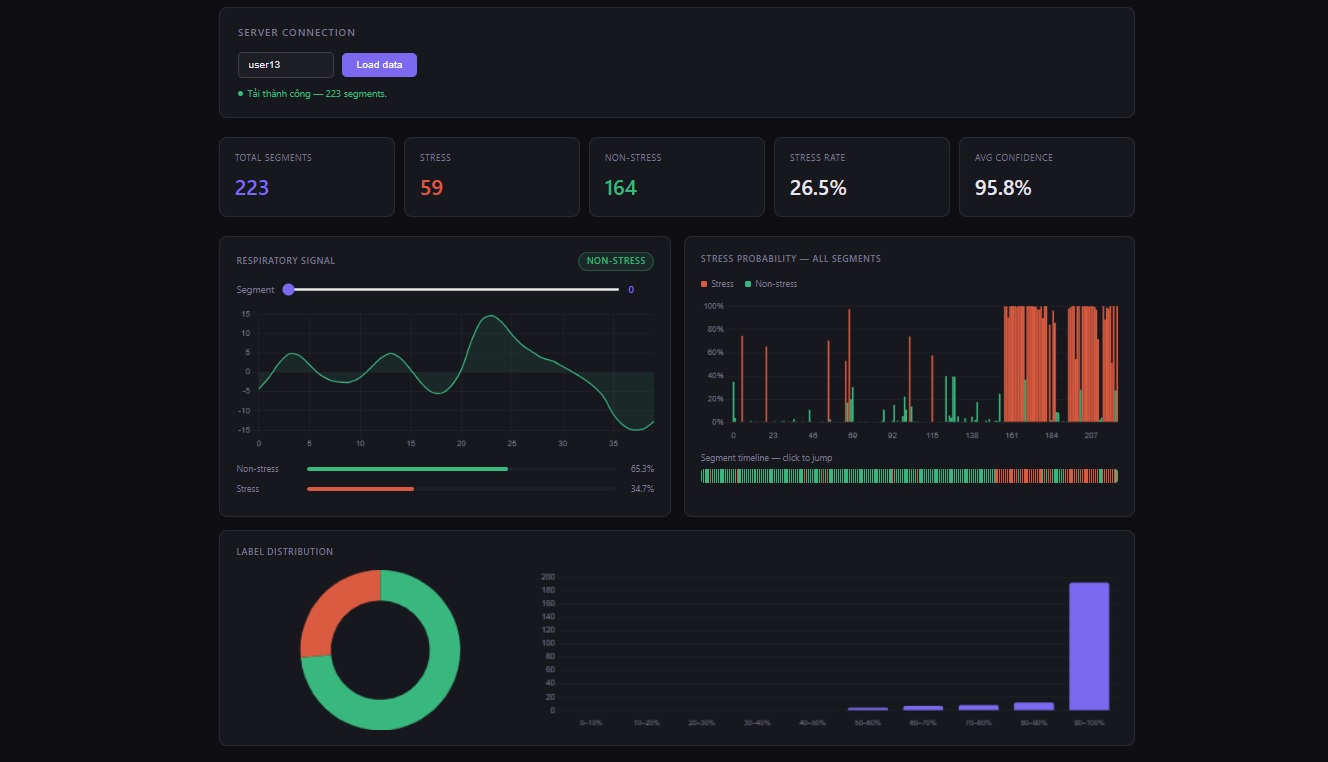
Stress Recognition from Wearable Signals
Problem: Stress is a leading driver of burnout and chronic illness, but existing detection tools are either clinical or unreliable in real-world conditions.
Solution: Developed a CNN-LSTM framework combined with Double Deep Q-Networks (DDQN) and Active Learning for stress recognition from wearable physiological signals. Evaluated using Leave-One-Subject-Out (LOSO) validation and achieved 95.1% accuracy with strong cross-subject generalization.
Published in Scopus & Springer
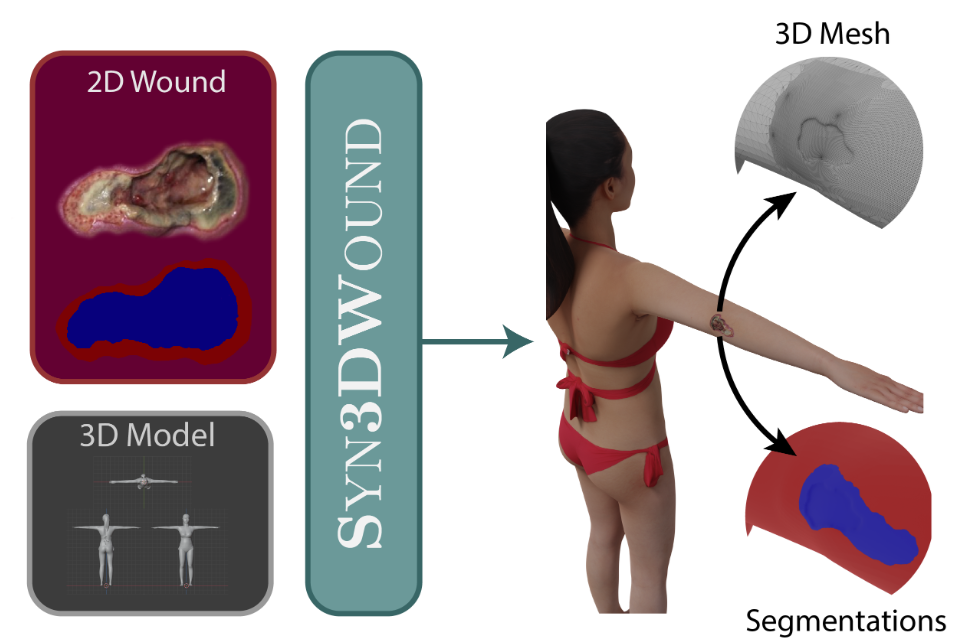
Automated Bio-Printable Wound Patch Generation
Problem: Manual or semi-automated wound patch design from 3D wound surfaces is time-consuming, inconsistent, and often results in inefficient material usage and non-conformal patches that do not properly fit complex wound geometries.
Solution: 4-stage automated pipeline — OBB-guided cropping → U-Net segmentation (Dice 0.921) → COLMAP dense reconstruction (CD 2.639 mm) → conformal STL patch generation. Achieves 23.3% bio-ink savings vs standard rectangular patches, watertight solids for 21/21 cases.
Publication: Accepted at the 11th International Conference on Biomedical Engineering in Vietnam (BME11).
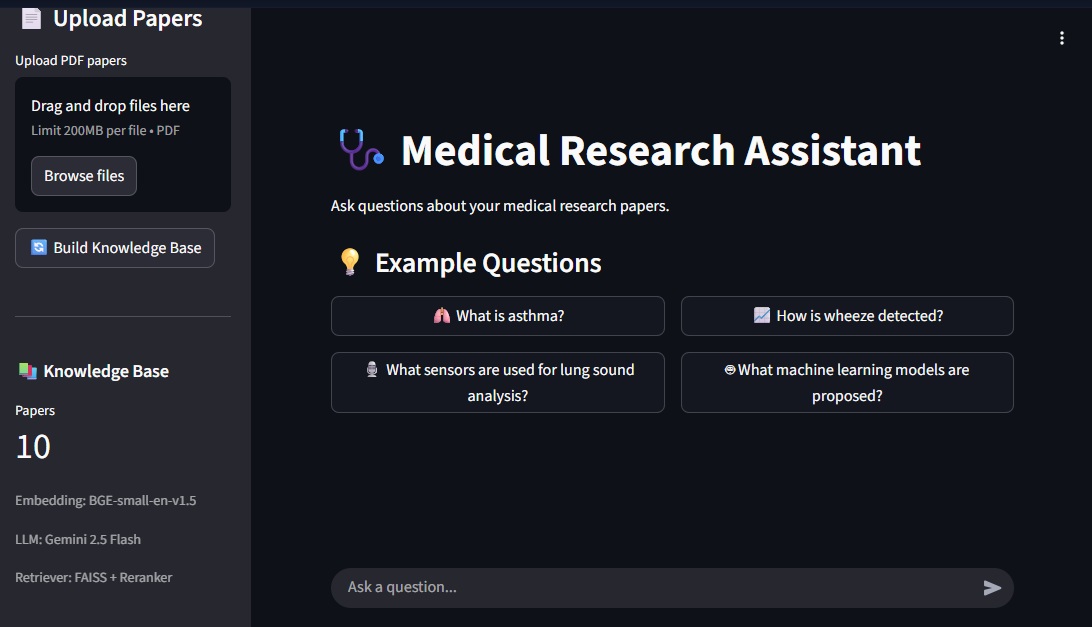
Medical Research Assistant (RAG)
Problem: Retrieving relevant information from hundreds of medical research papers is difficult using traditional keyword-based search.
Solution: Developed an end-to-end Retrieval-Augmented Generation pipeline using LangChain, FAISS, Cross-Encoder reranking, and Gemini LLM to provide context-aware answers grounded in scientific literature.
Supports multi-document retrieval, semantic search, source attribution, and real-time question answering through a Streamlit web application.
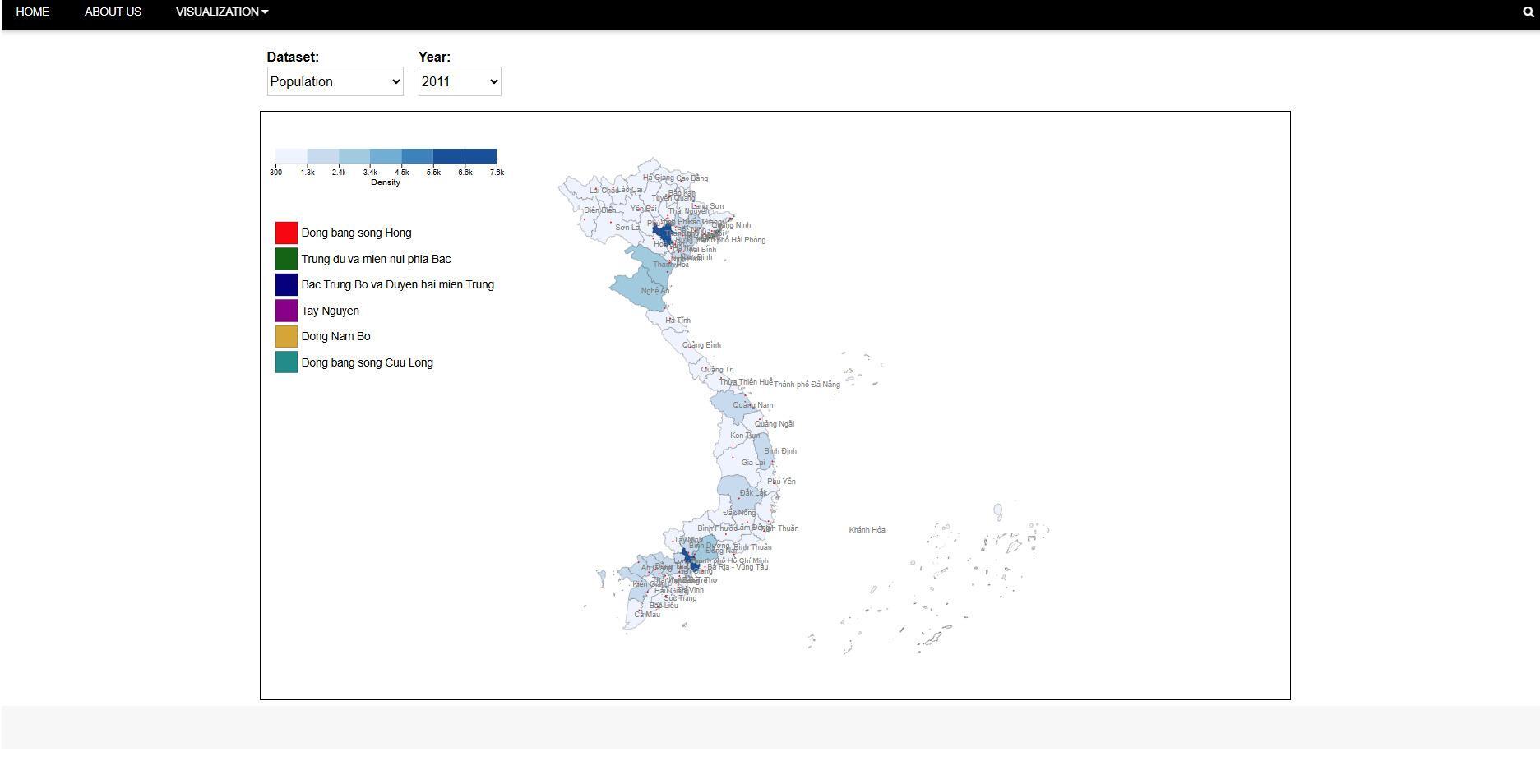
Web-based Interactive Visualization
Problem: Static datasets make it difficult to explore relationships between population, healthcare, and economic indicators in an interactive way.
Solution: Developed an interactive web-based visualization system for real-time data analysis using D3.js. The system dynamically loads data from GitHub, processes CSV/JSON files, and visualizes population, GRDP, healthcare infrastructure, and geographic distribution through interactive scatter plots and choropleth maps.
Implemented full frontend data pipeline with ETL-like processing (Extract–Transform–Load) directly in JavaScript, enabling seamless dataset switching and real-time updates without page reload.
Designed responsive UI using HTML & CSS to ensure smooth interaction, zooming, and cross-device compatibility for data exploration.